
15 September 2026
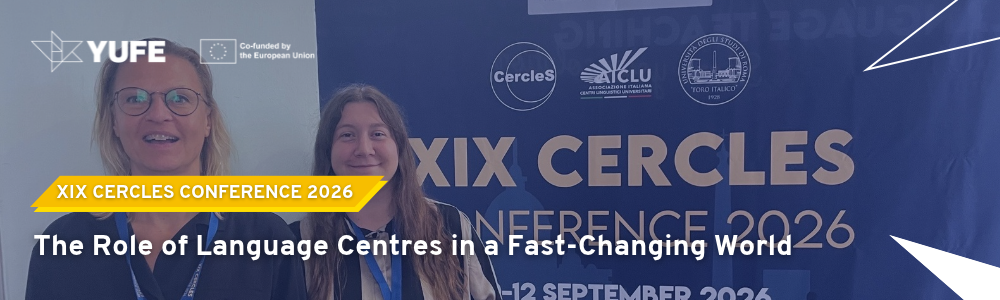
The CercleS Conference 2026 took place in Rome from 10 to 12 September under the theme The Role of Language Centres in a Fast-Changing World: Responding to Emerging Needs in Society, Communication, and Learning. The conference brought together more than 400 participants from language centres in higher education institutions across Europe and beyond. Language teachers, researchers and centre directors gathered to exchange ideas and gain inspiration from several keynote speakers, as well as from more than 150 presentations and workshops.
YUFE’s Multilingualism Taskforce was also well represented. Christine Engelen (UAntwerp) and Dora Kunović (UNIRI) delivered a presentation entitled “One Language, Many Voices: English as a Bridge Across Languages”. Laurent Rouveyrol (SNU) presented “Ensuring Consistency in University Language Certification Systems: Aligning Examinations to the CEFR” and led a workshop on “Action-Oriented Assessment: From Task Design to Evaluation”. So, what are their key takeaways from this intensive and thought-provoking conference?
First and foremost, we are living in a period of profound transformation that is reshaping education and, consequently, the role of language centres. Across higher education, their position is increasingly being questioned and, in some cases, even threatened. As universities adapt to changing societal needs, technological developments and financial pressures, language centres must rethink and clearly articulate their added value. The conference highlighted the need for language centres to move beyond a traditional service-provider role and position themselves as strategic partners, contributing to institutional priorities, educational innovation and language policy.
Global change and rapid digital developments are also transforming the way languages are taught and learned. One particularly striking message was: “We do not need people who simply speak several languages; technology can help with that. We need people who can negotiate meaning, judge what is appropriate, build connections, and move confidently between cultures.”
Unsurprisingly, generative AI was a recurring topic throughout the conference. While the emergence of AI initially created a sense of uncertainty and even concern, there is now a much greater understanding of both its opportunities and its limitations. AI is being used by students and teachers alike, and the consensus was that we should embrace its potential while remaining mindful of the risks. Several presentations explored ways to use generative AI responsibly, with careful consideration for ethical issues and academic integrity. A key message was that AI should always support learning and help students progress, rather than replace the human teacher or lead to micromanagement while monitoring the process rather than the product.
Discussions also focused on the skills required in today’s workplace. Many speakers highlighted a gap between the competences developed in higher education and the profiles sought by employers. Strong English-language proficiency remains highly valued, but employers are also looking for a broader set of human-centred skills. These include critical thinking, creativity, communication, collaboration, AI literacy, empathy and, perhaps most importantly, the ability to continue learning throughout one’s career. The message was clear: language education must play a role in developing these skills alongside linguistic competence.
In short, the conference reinforced the importance of continuing to strengthen the English proficiency of our students and colleagues. It also highlighted the enduring value of communication, intercultural understanding and human connection. Finally, it reminded us that technology, including generative AI, should remain a tool that supports learning and teaching, never a substitute for the human element at the heart of education. YUFE’s Multilingualism Taskforce is well positioned to build on these insights, ensuring that multilingualism remains a cornerstone of an inclusive and connected European university alliance.