
21 October 2026
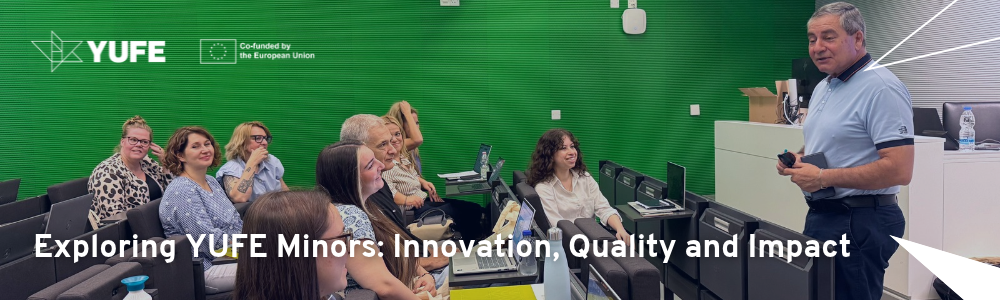
The University of Cyprus, as a member of the Young Universities for the Future of Europe (YUFE) Alliance, hosted an interactive session titled “Exploring YUFE Minors: Innovation, Quality and Impact” on 7 October 2026. The event took place at the Stelios Ioannou Learning Resource Centre on the University of Cyprus campus in Nicosia.
The session focused on the distinctive features of YUFE Minors, exploring how these educational programmes promote interdisciplinary learning, challenge-based education and European collaboration. It was designed for academic and administrative staff interested in educational innovation, curriculum development, quality assurance and engagement with external partners.
Rethinking Learning Through European Collaboration
Peter Vermeer, YUFE Bachelor programme director at Maastricht University, explained that YUFE Minors are semester-long mobility programmes that offer undergraduate students the opportunity to explore a specific thematic area while studying at a partner university within the Alliance. Comprising 30 ECTS credits, these programmes address pressing social, economic, environmental and other global challenges.
Unlike conventional minor programmes, YUFE Minors combine a thematic focus with an international learning experience and add a challenge course. Their interdisciplinary and challenge-based approach encourages students to connect knowledge across academic fields, engage with real-world issues and develop skills relevant to an increasingly interconnected European society.
By bringing together expertise and perspectives from different institutions and disciplines, YUFE Minors contribute to the Alliance’s broader ambition to create a more student-centred, open and inclusive European university.
Ensuring Quality and Recognition
A central theme of the session was the quality assurance framework underpinning YUFE Minors, as presented by Aleksandra Deluka – Tibljaš, full professor at the University of Rijeka. Maintaining academic standards and supporting recognition across participating institutions are essential to ensuring that students benefit from a coherent and meaningful learning experience.
The session provided an opportunity to examine how quality assurance can support the design and delivery of these programmes while facilitating cooperation among universities with different academic structures and institutional practices.
This focus reflects the importance of developing educational opportunities that combine innovation with academic rigour, transparency and recognition across borders.
Connecting Universities with Society
The event also highlighted the potential impact of challenge-based courses on external partners and wider communities. Collaboration through the integrated challenge course with societal stakeholders enables students to engage with practical challenges beyond the university environment, connecting academic knowledge with the needs and experiences of society, as was presented by Konstantinos Korfiatis, Professor at the University of Cyprus and YUFE minor coordinator at the University of Cyprus.
Such partnerships can create opportunities for knowledge exchange, collaborative problem-solving and learning that responds to real-world challenges. They also reinforce the role of universities as active contributors to social, economic and environmental development.
Finally, student Erato Constantinou from the University of Cyprus, who participated in a YUFE minor at the Universidad Carlos III de Madrid, was very happy with the experience and highly recommended the YUFE Minor. She particularly appreciated the teamwork-oriented approach and the integrated Challenge course, which gave her the opportunity to engage with a regional stakeholder while on exchange in Madrid.
For academic and administrative staff, the session offered a framework for considering how educational design, quality assurance and external engagement can work together to strengthen the impact of innovative learning programmes.
Through initiatives such as YUFE Minors, the YUFE Alliance continues to explore ways of making higher education more collaborative, internationally connected and responsive to the challenges facing Europe and its communities.